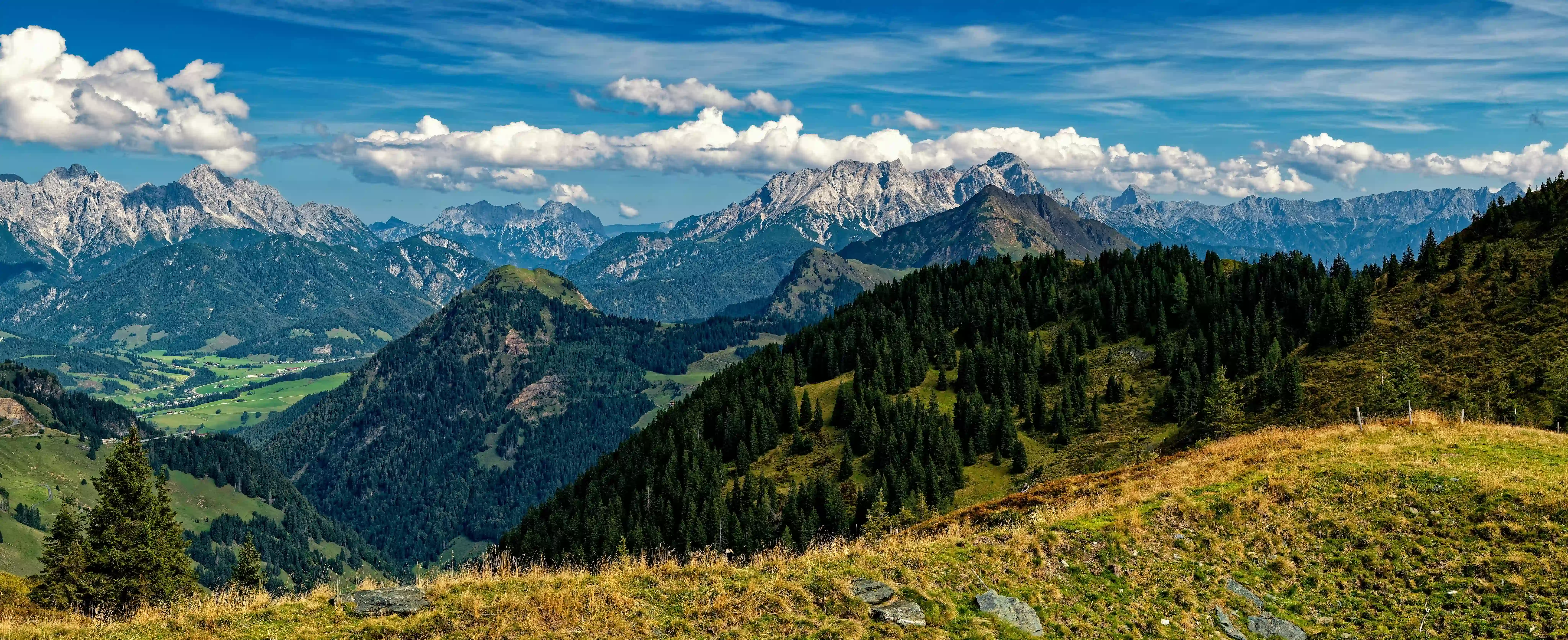
Long before Murree was a name on a tourist's bucket list, it was a strategic ridge above the Jhelum valley, identified by a British officer searching for cool air and clean water for soldiers dying of heat-related illness in the plains below. What began in 1851 as a modest cantonment sanatorium has, across 175 years, become Pakistan's most visited hill station — and is now, once again, in the middle of a dramatic transformation. Demolitions are clearing decades of unregulated construction, the area around the old GPO building is being turned into a nature-friendly public park, electric buses are running from a new bus station on Mall Road, and both GT Road and the Expressway are being rebuilt smoother and wider. This is the full story.
How Murree Was Founded: A British Sanatorium on a Punjab Ridge
Murree's story begins not with tourism but with survival. In the early 1850s, the British East India Company was struggling to keep its troops alive through the brutal summers of the Punjab plains. Heatstroke, cholera, and disease killed soldiers faster than any battle. Colonial administrators began a deliberate search across northern India for elevated, forested sites where garrisons could recover during the hottest months.
Major James Abbott, a British officer, is credited with identifying the ridge that would become Murree, naming it after the nearby village of "Murree" (believed to derive from the local word for a high place, possibly linked to the goddess Mai Murree worshipped by area villagers). Construction of the cantonment began in 1851, and by 1853 Murree had been formally established as a hill station, with the first church, Holy Trinity, consecrated soon after — it still stands today on Mall Road.
Murree as Punjab's Summer Capital
For a brief but important period in the 1850s and 1860s, Murree functioned as the summer capital of the Punjab, with the provincial government relocating its offices uphill during the hottest months to escape the heat of Lahore. Grand colonial residences, the Lawrence College for the children of British officers (founded 1860), and the unmistakable Mall Road shopping promenade all date from this formative era. When the role of summer capital eventually shifted toward Shimla in the wider Raj administrative structure, Murree retained its importance as the principal hill station for the Rawalpindi garrison and the broader Pothohar region — a role it has never really lost.
Murree was never meant to become a city. It was built as an escape — a place of pine forest, mist, and quiet, designed for a few thousand people. Everything that has happened since is the story of that quiet place meeting modern demand.
— Local historical account, Murree town recordsFrom Cantonment Town to National Icon
After the creation of Pakistan in 1947, Murree's role shifted from a colonial retreat to a national one. It became, almost overnight, the favourite summer and winter destination for families from Rawalpindi, Islamabad, and across Punjab. Mall Road — once a quiet colonial promenade — grew into the bustling commercial spine of the town, lined with hotels, restaurants, and shops that multiplied with every passing decade.
The Anti-Encroachment Demolitions: Why Murree Is Being Torn Down to Be Rebuilt
In recent years, large sections of Murree's commercial core have been demolished by order of the Rawalpindi District Administration and Punjab government, under sweeping anti-encroachment campaigns. To outsiders the bulldozers can look alarming. To planners and many longtime residents, the demolitions are a long-overdue correction of decades of unchecked construction.
What Exactly Is Being Removed
The demolition drives have primarily targeted structures built illegally on government land, forest reserve, road right-of-way, and natural drainage channels — including encroaching shop extensions on Mall Road, unauthorized parking structures, and buildings constructed without approved plans or in violation of Murree's master plan and building height restrictions. Several multi-storey plazas built without proper structural clearance, particularly those overhanging public roads or built directly over natural water channels (locally known as "khads" or "nullahs"), have been priority targets, since these structures pose direct flood and landslide risks.
Why the Demolitions Are Happening
- Road widening: Removing encroachments to widen Mall Road and key arteries that have remained essentially unchanged in width since colonial times.
- Flood and landslide risk: Clearing structures built over natural drainage channels that worsen flooding and slope instability during monsoon and snowmelt.
- Restoring forest and green belt land: Reclaiming government and forest land that had been illegally occupied for commercial construction.
- Structural safety: Removing buildings constructed without engineering approval, particularly multi-storey plazas on unstable slopes.
- Enabling the new traffic and parking plan: Creating space for designated parking zones, shuttle stops, and the widened road network described below.
The Human and Economic Cost
The demolitions have not been without controversy. Many shopkeepers and small business owners — some operating premises their families had run for generations — have lost their livelihoods with limited notice or compensation. Local trader associations have repeatedly petitioned the courts and the administration, arguing that decades of government tolerance (including, in many cases, the collection of rent or fees for these same structures) created a reasonable expectation that the buildings were sanctioned.
For visitors and investors: Because demolition and rebuilding activity is ongoing in parts of Murree, some sections of Mall Road and adjoining streets may periodically be affected by construction work, partial closures, or altered foot traffic. Always check current conditions before finalising travel plans around the town centre, and confirm directly with your hotel for the latest local updates.
Despite the disruption, town planners argue the long-term outcome — wider roads, safer buildings, restored drainage, and a more walkable Mall Road — will make Murree dramatically more liveable and visitor-friendly than the congested version of the town that existed before 2022.
The GPO Building Demolition: Turning Encroached Land Into a Park
One of the most symbolic demolitions in Murree's ongoing rebuild is the removal of structures around the old GPO (General Post Office) area on Mall Road. For decades, the land around the GPO had been gradually built over — shop extensions, makeshift stalls, and unauthorized additions had eaten into what was originally open government land, narrowing footpaths and removing what little green space the town centre had left.
Under the same anti-encroachment drive discussed above, the Rawalpindi District Administration ordered the demolition of these encroaching structures around the GPO building specifically to reclaim the land for a planned eco-friendly public park. Rather than auctioning or re-developing the freed land commercially, the plan designates it as green, nature-focused public space — a deliberate reversal of the decades-long pattern of paving over every available metre of Mall Road for shops and plazas.
What the New GPO Park Aims to Deliver
- Restored green cover in the heart of Mall Road, with native pine and ornamental trees replacing concrete encroachments.
- A car-free, walkable public space for families and tourists, something old Murree's congested commercial strip has long lacked.
- Protection of the historic GPO building itself, preserving one of Murree's surviving colonial-era structures rather than letting it stay hemmed in by illegal construction.
- A model for further reclamation — officials have suggested similar green-space conversions could follow at other cleared encroachment sites along Mall Road if the GPO park proves successful.
For too long, every open space in Murree was seen only as a place to build another shop. The GPO park is the first real signal that the town is willing to give land back to nature instead of concrete.
— Local civic commentary, Murree town affairsThe project also ties directly into preserving Murree's visual identity. Older photographs of Mall Road — wide, tree-lined, with the GPO and Holy Trinity Church clearly visible against open hillside — stand in sharp contrast to the densely built-up version of the street that existed before the demolitions began. Heritage advocates have pushed for the new park, and the wider rebuild generally, to deliberately echo that older, more open look of Murree rather than simply replacing one set of buildings with another.
Electric Buses in Murree: A Cleaner, Calmer Way Up the Hill
One of the most visible and welcomed changes on Murree's roads in recent seasons has been the introduction of electric and hybrid shuttle buses, operated in coordination with the Rawalpindi District Administration and Punjab's tourism and transport departments. The concept is simple but powerful: instead of tens of thousands of private vehicles individually climbing the same narrow road, visitors park at designated zones lower down and are shuttled up by bus.
Why Electric Buses Make Sense for Murree
Murree's geography — a single primary access road, steep gradients, and a town centre that was never designed for heavy traffic — makes it an almost ideal candidate for shuttle-based transit. Electric buses bring three compounding benefits that matter specifically here:
-
Cleaner air on a sensitive ridge. Murree's pine forests and the town's elevation mean vehicle emissions linger longer than in the plains. Electric buses remove a significant source of tailpipe pollution from the town centre.
-
Quieter Mall Road. Reduced idling and honking from private vehicle gridlock restores some of the calm that originally made Murree a retreat rather than a traffic jam with a view.
-
Far higher passenger capacity per vehicle. A single shuttle bus can move 40–50 people in the space typically occupied by 10–12 private cars, directly easing the bottleneck on the single access road.
-
Lower long-term operating cost. Electric fleets reduce dependence on fuel imports and are cheaper to run on the kind of short, repetitive shuttle routes that connect parking zones to Mall Road and key viewpoints.
A purpose-built Murree Bus Station now anchors this shuttle network, serving as the main hub where the new electric buses load and unload passengers before they continue on foot into Mall Road. Previously, buses, vans, and private vehicles all competed for the same cramped curb space scattered along the road, which itself was a major contributor to the town centre's gridlock. Centralising arrivals at one organised station, paired with the electric fleet, has made the entry experience noticeably calmer for visitors arriving without their own vehicle.
The electric bus program has so far operated primarily during peak season and Section 144 enforcement periods, when private vehicle entry is restricted and shuttle services become the main way for day-trippers to reach the town centre. Officials have signalled intentions to expand the fleet, add more charging infrastructure at the bus station, and extend service hours as the program proves itself, with the long-term goal of making shuttle transit a year-round option rather than only an emergency overflow measure.
New Roads, GT Road & Expressway Upgrades Reshaping Murree
Alongside demolitions and transit upgrades, physical road infrastructure around Murree is being widened and, in places, rebuilt entirely. For a town whose traffic crisis has always stemmed from having essentially one way in and one way out, every metre of new road capacity matters.
Murree Expressway Widening
The Murree Expressway, the primary route connecting Rawalpindi and Islamabad to Murree, has seen phased widening and resurfacing work in sections that were previously prone to single-lane bottlenecks. These upgrades aim to increase the road's effective capacity and reduce the queue lengths that, on the worst peak days, have historically stretched 20–30 kilometres back toward the plains.
GT Road: Smoother, Wider Access on the Way
Beyond the Expressway, sections of the historic GT Road (Grand Trunk Road) approach toward Murree are also being resurfaced and widened as part of the same infrastructure push. GT Road has long served as a secondary and feeder route for traffic moving between Rawalpindi, Islamabad, and the lower Murree hills, and decades of heavy use without major rehabilitation had left long stretches potholed, narrow, and prone to landslide damage during monsoon season.
Planned upgrades to GT Road include resurfacing with a smoother asphalt finish, widening of the most constricted curves and chokepoints, improved retaining walls and drainage on landslide-prone sections, and better signage and lighting for night driving. Once complete, a smoother GT Road is expected to ease pressure on the Expressway by giving drivers — particularly those coming from areas like Rawalpindi's older neighbourhoods and the Kashmir Highway corridor — a genuinely usable alternative rather than a rough backup route.
Local Access Road Improvements
Within the town itself, roads leading to key viewpoints — including Kashmir Point and Pindi Point — have been targeted for resurfacing, drainage improvement, and in some sections, widening, often made possible directly by the anti-encroachment demolitions clearing illegal structures from the road edges described earlier in this article.
Longer-Term Proposals
Beyond the projects already under construction, planners and successive governments have floated longer-term proposals including a second alternate access route to distribute traffic across two entry points instead of one, and feasibility studies for a Rawalpindi–Murree cable car corridor that would move passengers above the congested road network entirely. Neither has reached full construction as of 2026, but both remain part of the public discussion around how Murree can grow sustainably rather than simply absorbing ever more vehicles on the same single road.
Quick Reference: Murree's Transformation at a Glance
- Founded: 1851, as a British colonial cantonment sanatorium.
- Demolitions: Anti-encroachment drives removing illegal construction on roads, forest land, and drainage channels.
- GPO park: Land reclaimed from encroachments around the GPO building, converted into an eco-friendly public park.
- Electric buses: A new electric shuttle fleet running from the purpose-built Murree Bus Station to Mall Road, expanding seasonally.
- New roads: Murree Expressway widening, GT Road resurfacing, local access road upgrades, and longer-term alternate route proposals.
What Murree's Transformation Means for Visitors Today
For travellers, all of this change adds up to a town in genuine transition. Old Murree retains its colonial charm — Holy Trinity Church, the pine-lined Mall Road, Lawrence College, and the misty ridgeline views that have drawn visitors for 175 years. But it is also visibly under construction in places, with shuttle buses replacing some private vehicle journeys, a new park rising where shops once stood near the GPO, and smoother roads gradually replacing the cracked, congested routes of the past.
The Murree of 2026 is neither the quiet colonial sanatorium of 1851 nor the gridlocked town of the early 2020s. It is something in between — a destination actively rebuilding itself, road by road and shuttle route by shuttle route, while trying to hold on to the pine forests, mountain air, and open green views that made people fall in love with it in the first place.