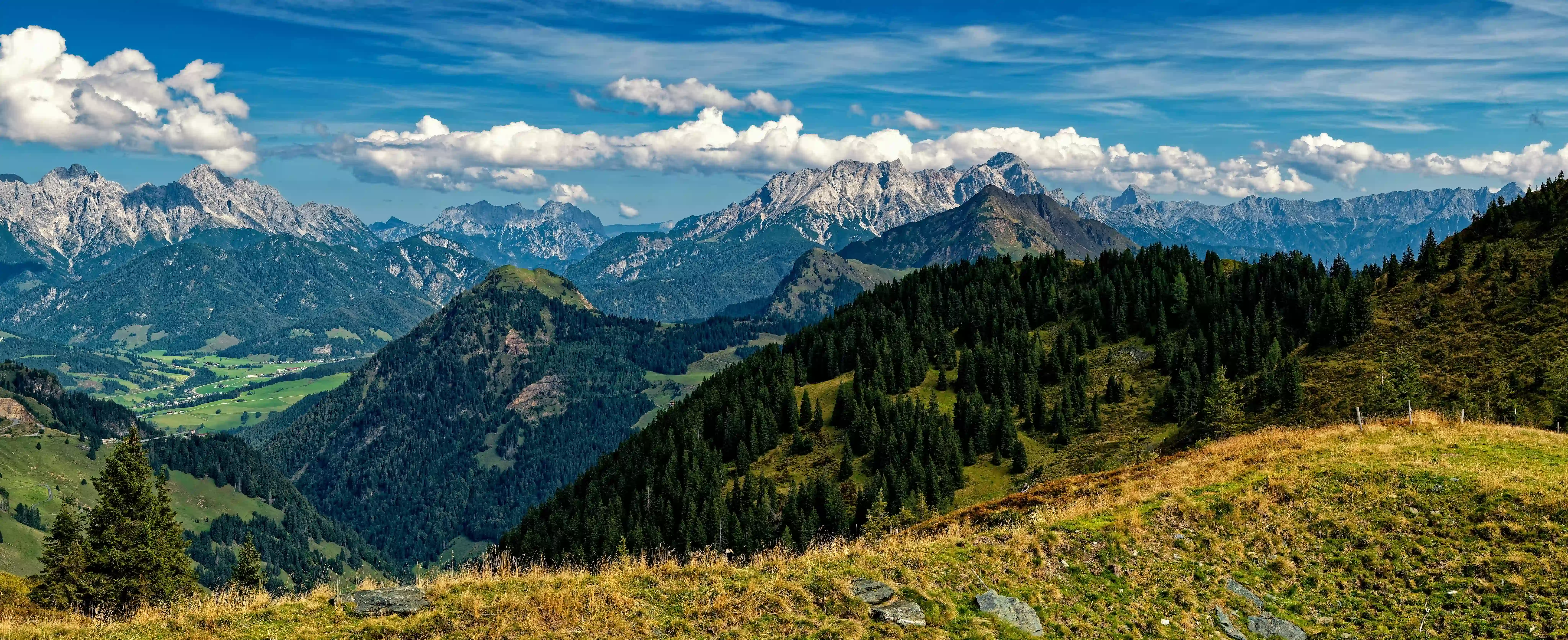
Every winter when the first snow dusts the pines, and every summer when the heat drives families uphill, Murree transforms. The charming hill station — perched 2,291 metres above sea level in Pakistan's Punjab — has long been the nation's most beloved escape. But in recent years, that love has become overwhelming. Roads built for thousands now carry millions. And the government's response — imposing Section 144 of the Code of Criminal Procedure — has become as predictable as the snowfall itself.
This article explains why the traffic crisis in Murree reached breaking point, what Section 144 actually means, how it is enforced, and — most importantly — how you can plan a visit that is both enjoyable and safe.
Why Does Murree Face Such Extreme Traffic?
Murree's traffic problem is not simply about too many cars. It is the collision of geography, infrastructure, tourism culture, and the absence of alternatives — all in one narrow valley.
Geography and Infrastructure Constraints
Murree sits on a ridge connected to the rest of Pakistan by essentially one major artery: the Murree Expressway from Rawalpindi, which becomes a single carriageway as it climbs into the hills. Side roads are narrow, winding, and often impassable in snow. There is no bypass, no ring road, and no rail link. Every vehicle — from a family hatchback to a commercial truck — must use the same bottleneck.
The road was designed for a town of 30,000. Today, on a winter holiday weekend, it must absorb the population of a medium-sized city — all arriving and departing within the same few hours.
— District Administration, RawalpindiThe Explosive Growth of Domestic Tourism
Pakistan's middle class has grown rapidly over the past two decades. Cheaper cars, easier access to travel information through social media, and Murree's strong cultural identity as "the family hill station" have turned seasonal visits into a year-round phenomenon. What was once a leisurely summer retreat for civil servants and their families is now a weekend destination for millions across Punjab and beyond.
During events like Eid holidays, Christmas week, and the first snowfall announcement, Murree can receive between 50,000 and 100,000 visitors in a single day. The road leading up sees queues stretching 20–30 kilometres back toward Rawalpindi, with waiting times exceeding 6–8 hours in extreme cases.
The Tragic 2022 Snowstorm: A Turning Point
The crisis reached its most tragic point in January 2022, when a sudden heavy snowstorm trapped thousands of vehicles on the Murree–Islamabad road. Families were stranded overnight in freezing temperatures inside their cars. At least 22 people died, many from hypothermia, including children. The tragedy shocked the nation and forced policymakers to confront how dangerously unmanaged the tourist influx had become.
What Is Section 144 and Why Is It Applied to Murree?
Section 144 of the Code of Criminal Procedure (CrPC) is a colonial-era legal provision that grants a District Magistrate or Commissioner the power to issue urgent orders to prevent potential threats to public safety, peace, or order. These orders can restrict the movement of people and vehicles, prohibit gatherings, or close public spaces — without going through the normal legislative process.
In the context of Murree, Section 144 is invoked specifically to restrict or ban vehicle entry when the road network reaches saturation. It is not martial law; it is a crowd and traffic management measure with legal teeth. Violators can be arrested and fined.
What Section 144 Typically Restricts in Murree
- Entry of private vehicles beyond designated check posts (usually at Barakahu or Kuldana).
- Roadside parking along the Mall Road and main approaches during peak hours.
- Entry of vehicles from certain license plate areas (e.g., Lahore or Faisalabad) during extreme congestion.
- Entry after specific hours — commonly after 12:00 PM or 2:00 PM on high-traffic days.
- Overnight parking in unapproved areas during snowfall advisories.
Who Enforces It?
Enforcement is handled jointly by the Rawalpindi District Administration, Punjab Police, Rescue 1122, and the National Highways and Motorway Police (NHMP). Check posts are established at entry points such as Barakahu, Chattar, Ghora Gali, and the Expressway toll plaza. Vehicles that are turned back are typically redirected to lower parking zones in Rawalpindi.
Important for visitors: Section 144 notifications can be issued with very little advance warning — sometimes just hours before a holiday weekend begins. Always check the Rawalpindi District Administration's official announcements, Pakistan's National Disaster Management Authority (NDMA) alerts, or trusted local sources before heading to Murree on busy dates.
Is Section 144 the Right Answer? The Ongoing Debate
The imposition of Section 144 in Murree has sparked genuine public debate. On one side are those who see it as a necessary emergency measure that saves lives. On the other are tourists, hotel owners, and local businesses who argue it is a reactive, blunt instrument that punishes law-abiding visitors and devastates the local economy.
Arguments in Favour of the Restriction
Emergency responders and district administrators argue that without vehicle limits, emergency vehicles — ambulances, fire trucks, rescue units — simply cannot reach people in distress. During the 2022 tragedy, rescuers were themselves stuck in traffic. The restriction, however disruptive, prevents a recreational crisis from becoming a fatal one.
Environmentalists also note that unchecked vehicle emissions and footfall are causing visible ecological damage to Murree's forests and waterways. Crowd control is as much an environmental issue as a safety one.
Arguments Against — The Local Business Perspective
Hotel owners, shopkeepers, restaurant operators, and tour guides in Murree are among the most vocal critics of Section 144. A single restriction during Eid or Christmas can wipe out the most profitable days of the year. Local business associations have repeatedly called on the government to invest in long-term infrastructure solutions rather than repeatedly blocking tourists at the gate.
We understand the safety concerns — but turning away families at the toll plaza is not a solution. It is a shortcut that costs us everything. Build the infrastructure. We have been asking for years.
— President, Murree Hotel Association (reported in Dawn, 2024)What Experts Recommend: Long-Term Fixes
Urban planners and tourism economists broadly agree that sustainable management of Murree requires:
- An alternate road network — a second access route from Haripur or Mansehra to distribute traffic across two entry points.
- A light rail or cable car system — connecting Rawalpindi or Islamabad with the top of Murree, eliminating the need for thousands of private vehicles on mountain roads.
- Distributed tourism — marketing and developing nearby destinations (Nathia Gali, Ayubia, Patriata) to draw visitors away from the single bottleneck of Mall Road.
- A pre-booking and token system — requiring visitors to reserve vehicle slots digitally, much like national parks in Europe and North America.
How to Visit Murree Smartly — 10 Tips for 2026
Despite the restrictions, Murree remains a magical destination — and with smart planning, you can enjoy it fully while avoiding the worst of the traffic chaos. Here is what experienced visitors do differently:
-
Travel on weekdays, not weekends. Monday to Thursday sees a fraction of weekend traffic. The views, food, and hotel rooms are the same — the queues are not.
-
Arrive before 8 AM or after 8 PM. The heaviest traffic builds from 10 AM to 6 PM. Early morning arrivals enter a peaceful town; late-night arrivals find quiet roads.
-
Pre-book your accommodation. Staying overnight transforms your experience. You get to enjoy Murree after the day-trippers leave — which is when it is genuinely beautiful. Murree Heights offers early booking discounts.
-
Check Section 144 status before you leave. Follow the Rawalpindi District Administration on social media, or call your hotel. Section 144 can be imposed with a few hours' notice.
-
Use the shuttle bus service. When Section 144 is in force, the administration typically operates shuttle buses from Rawalpindi's designated parking lots. Use them — it is faster than sitting in a 6-hour queue.
-
Keep your fuel tank full before entering. Fuel stations in Murree town are few and often run dry on peak days. Fill up in Rawalpindi or at the expressway before the climb.
-
Carry snow chains in winter. If you plan to visit during a snowfall period, snow chains are not optional — they are a requirement. Police check posts enforce this during heavy snowfall.
-
Explore beyond Mall Road. Patriata (New Murree), Pindi Point, Kashmir Point, and Nathia Gali are extraordinary alternatives with far fewer crowds. Ask your hotel for local guidance.
-
Download offline maps. Mobile data can be slow or unavailable during peak traffic. Download Google Maps or Maps.me for the area before you leave home.
-
Be patient and kind. Traffic police, rescue workers, and hotel staff are under extraordinary stress on peak days. Patience is not just a virtue — it is the defining trait of a good visitor.
The Road Ahead: Can Murree's Tourism Be Made Sustainable?
There is cautious optimism. The Punjab government has announced feasibility studies for a Rawalpindi–Murree cable car project. The Expressway has been widened in sections. New parking plazas are being developed at lower elevations. A digital token system, piloted briefly, is expected to be expanded.
But the pace of infrastructure investment has not kept up with the pace of visitor growth. Until it does, Section 144 will remain the government's most reliable tool — blunt, unpopular, but effective at preventing a holiday tragedy.
For now, the best way to love Murree is to visit it thoughtfully. Come on a quiet Tuesday in October when the forests are amber and the Mall Road belongs to you. Stay two nights at a property that knows the mountain. Wake up to mist in the pine trees. That is the Murree that locals know — and the one that Section 144, in its heavy-handed way, is trying to protect.
Quick Reference: Section 144 in Murree
- What it is: A legal order by the District Magistrate restricting vehicle entry and movement.
- When imposed: Peak holiday seasons — Eid, Christmas/New Year week, first snowfall of the season.
- Who enforces: Rawalpindi Police, NHMP, and district administration at toll plazas and check posts.
- Penalty for violation: Vehicle may be turned back; repeated violations may result in detention.
- Where to check status: Rawalpindi District Administration official Facebook/Twitter, or call your hotel directly.